
Dr. Sunita
Equipping the Pharmacy Profession for Modern Healthcare
The healthcare sector is undergoing a significant transformation driven by technological advancements, artificial intelligence (AI), personalized medicine, digital health, and changing patient expectations. Pharmacists are no longer limited to dispensing medicines; they are increasingly involved in patient care, medication safety, disease prevention, research, and public health. Therefore, pharmacy education must evolve to prepare professionals who are scientifically competent, technologically skilled, ethically responsible, and patient-centered.
From Pharmaceutical Knowledge to Patient-Centred Care
Traditional pharmacy education emphasizes pharmacology, pharmaceutics, pharmaceutical chemistry, and dispensing practices. Although these subjects remain essential, modern healthcare requires additional competencies in patient counselling, clinical reasoning, pharmacovigilance, medication adherence, and rational drug use.
Future pharmacists must understand not only how medicines work but also how to use them safely and effectively for individual patients. Communication skills, ethical decision-making, and collaboration with healthcare professionals are equally important for delivering quality healthcare.
Embracing Digital Transformation
Digital prescriptions, electronic health records, telepharmacy, automated dispensing systems, and mobile health applications are reshaping pharmacy practice. Artificial intelligence is also creating opportunities in drug discovery, adverse drug reaction monitoring, medication management, and pharmaceutical research.
Pharmacy students must develop digital literacy and learn to use emerging technologies responsibly. However, technology should support rather than replace human judgement, empathy, and professional accountability. Integrating digital learning tools and technology-oriented assignments can help students become confident and adaptable professionals.
Preparing for Personalized Healthcare
Personalized medicine aims to select treatments according to individual patient characteristics, including genetic variations, biomarkers, and clinical conditions. Pharmacogenomics and precision medicine are becoming increasingly important in optimizing drug selection, dosage, and therapeutic outcomes.
Introducing students to these concepts, alongside evidence-based medicine and current research developments, can prepare them for future advances in pharmaceutical care.
Strengthening Clinical Skills and Practical Learning
Practical exposure is essential for developing competent pharmacists. Hospital training, community pharmacy visits, industrial internships, laboratory exercises, and patient-centered projects enable students to apply classroom knowledge in professional settings.
Case-based learning and patient counselling exercises help students recognize medication-related problems, understand adverse drug reactions, and promote treatment adherence. Such experiences bridge the gap between theoretical knowledge and practical application.
Developing Skills Beyond the Classroom
Academic knowledge alone is insufficient to meet the demands of modern healthcare. Communication, teamwork, leadership, critical thinking, problem-solving, and adaptability are equally important. Seminars, presentations, workshops, research projects, and collaborative activities provide opportunities to develop these skills.
Lifelong learning is another essential responsibility because pharmaceutical sciences, treatment guidelines, and healthcare technologies continue to evolve. Pharmacists must regularly update their knowledge to maintain professional competence.
Addressing Emerging Healthcare Challenges
Antimicrobial resistance, chronic diseases, polypharmacy, medication errors, and inappropriate medicine use are major healthcare challenges. Pharmacists can contribute through antimicrobial stewardship, pharmacovigilance, patient education, preventive healthcare, and the promotion of rational medicine use.
Pharmacy education should therefore prepare students to understand public health concerns and participate in awareness campaigns, community outreach programmes, and initiatives promoting the safe and responsible use of medicines.
Building Industry-Ready Professionals
The pharmaceutical industry offers diverse career opportunities in formulation development, quality assurance, quality control, regulatory affairs, clinical research, pharmacovigilance, biotechnology, and advanced drug delivery systems.
Industry-oriented projects, laboratory training, internships, and professional interactions can improve students’ employability and practical competence. Entrepreneurship and innovation should also be encouraged to help graduates explore opportunities in pharmaceutical businesses, healthcare services, and research-based enterprises.
The Role of Pharmacy Educators and Institutions
Educators and educational institutions play a crucial role in preparing pharmacists for the changing healthcare environment. Modern teaching should combine foundational knowledge with interactive discussions, demonstrations, simulations, research activities, and application-based learning.
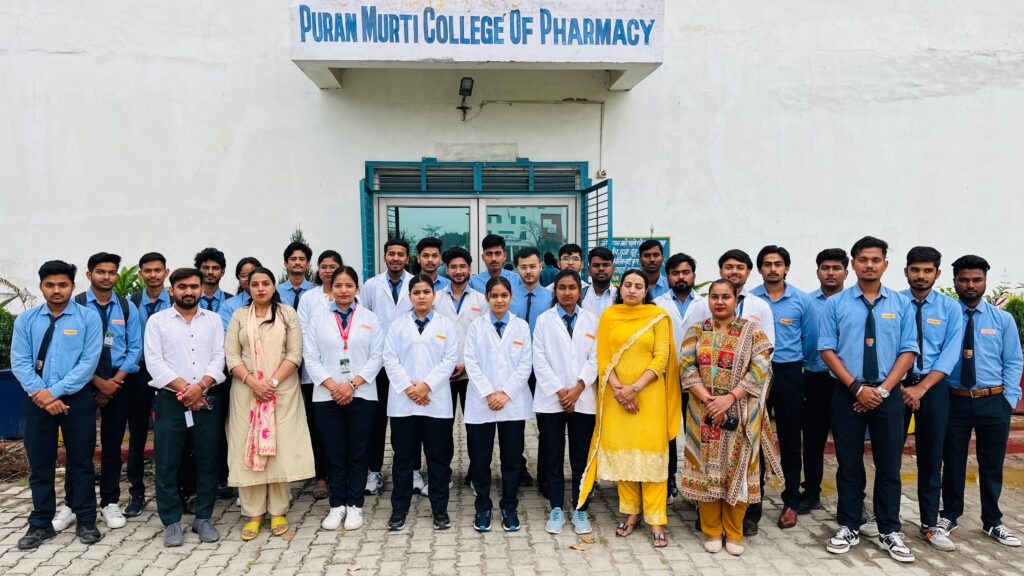
In this context, Puran Murti College of Pharmacy aims to contribute to the transformation of pharmacy education through quality teaching, practical learning, research activities, industry-oriented training, and community engagement. By encouraging innovation, ethical professional practices, technological awareness, and lifelong learning, the institution seeks to prepare future-ready pharmacy professionals capable of contributing to safer medication use, improved patient care, and the advancement of healthcare.
Conclusion
Preparing pharmacists for a changing healthcare era requires a comprehensive approach that integrates pharmaceutical sciences, clinical competence, digital literacy, communication, research, and ethical decision-making. Educational institutions must continuously adapt their curricula and training strategies to meet emerging healthcare needs. By developing knowledgeable, compassionate, and innovative professionals, pharmacy education can contribute to safer medication practices, better patient outcomes, and a stronger healthcare system. Ultimately, preparing future-ready pharmacists is not merely an educational responsibility; it is an investment in improved patient care and the future of healthcare.
The author is the HoD of Puran Murti College of Pharmacy and can be reached at ahlawat978@gmail.com
Courtesy: THE ASSAM RISING