For decades, students from India have crossed borders in search of quality education. From the United States and the United Kingdom to Australia and Canada, Indian students have become a defining force in global classrooms. Today, however, the narrative is beginning to change. As India looks towards 2047, the centenary year of its independence, a new question is taking centre stage. Can India itself become a global education powerhouse?
The vision is ambitious yet increasingly realistic. India is no longer focused solely on sending talent abroad. It now seeks to attract international students, host world class universities, strengthen research output, and establish itself as a global knowledge destination.
A New Era of Global Campuses
One of the most significant developments in recent years has been the opening of India’s higher education sector to foreign universities. Enabled by the National Education Policy 2020, this move has the potential to transform the country’s academic landscape.
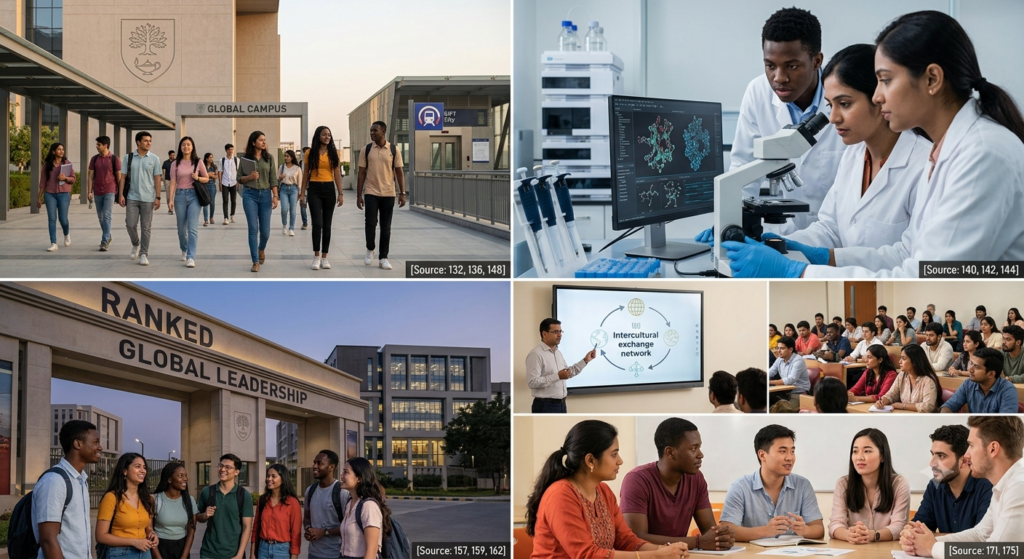
Several globally reputed institutions have announced plans to establish campuses in India. Education hubs such as GIFT City in Gujarat are emerging as preferred destinations for these initiatives.
For Indian students, this means access to internationally recognised degrees without the financial burden of studying overseas. For international students, India offers an opportunity to gain a quality education in a fast growing economy at a comparatively affordable cost.
The entry of foreign universities is expected to enhance competition, encourage innovation, and raise overall academic standards across the country.
Building a Research Driven Nation
A truly global education destination is built not only on teaching excellence but also on research leadership. India has demonstrated its capabilities in sectors such as information technology, pharmaceuticals, engineering, and space science. However, when compared with leading academic nations, research output from Indian universities remains relatively modest.
Recognising this challenge, policymakers have increased their focus on research funding, innovation ecosystems, and university industry collaboration. The National Research Foundation is expected to play a critical role in fostering a stronger research culture.
If India aims to compete with the world’s leading education systems, its universities must become centres of knowledge creation rather than simply knowledge dissemination. Research excellence will be crucial for attracting global talent and improving international academic reputation.
Welcoming Students from Around the World
Another key pillar of India’s 2047 education vision is the internationalisation of campuses. Countries such as the United States, Australia, Germany, and the United Kingdom attract hundreds of thousands of international students each year. These students contribute significantly to both the economy and the academic environment.
India is gradually positioning itself as an alternative destination. Improved visa policies, scholarship opportunities, international partnerships, and student exchange programmes are helping create a more welcoming ecosystem.
The country possesses several natural advantages. English is widely used as a medium of instruction. Tuition fees and living expenses are often lower than in many Western countries. India’s cultural diversity and growing economy further strengthen its appeal.
For students from Asia, Africa, and the Middle East, India has the potential to become an increasingly attractive study destination.
The Global Rankings Challenge
No discussion about global education leadership is complete without examining university rankings. While India has made notable progress, only a limited number of institutions feature among the world’s top ranked universities. Global rankings evaluate factors such as research impact, academic reputation, employer perception, international faculty, and global collaborations.
Institutions such as the Indian Institutes of Technology and the Indian Institute of Science have earned worldwide recognition. However, India needs a much larger pool of globally competitive universities if it wishes to emerge as a true education hub.
Achieving this goal will require sustained investment, academic autonomy, international partnerships, and a relentless focus on quality.
Challenges That Cannot Be Ignored
The road to becoming a global education leader is not without obstacles. Issues related to faculty shortages, research infrastructure, affordability, and equitable access continue to demand attention. Expanding capacity while maintaining quality will remain one of the biggest tests for policymakers and institutions alike.
At the same time, rapid technological change is reshaping the future of learning. Universities must prepare students not only for today’s jobs but also for careers that have yet to emerge.
The Road to 2047
India’s education story is entering a new chapter. The country that once looked outward for academic opportunities is now seeking to bring the world into its classrooms. The question is no longer whether India can participate in the global education economy. It already does. The real challenge is whether India can become one of the world’s most influential centres of learning, innovation, and research. If reforms continue with consistency and purpose, the answer may well be affirmative. By 2047, India may not simply educate its own vast population. It may help educate the world.
Source: TMN