How Interactive Learning Is Bringing River Management to Life in Arunachal
Boleng Town, Arunachal Pradesh | April 20, 2026
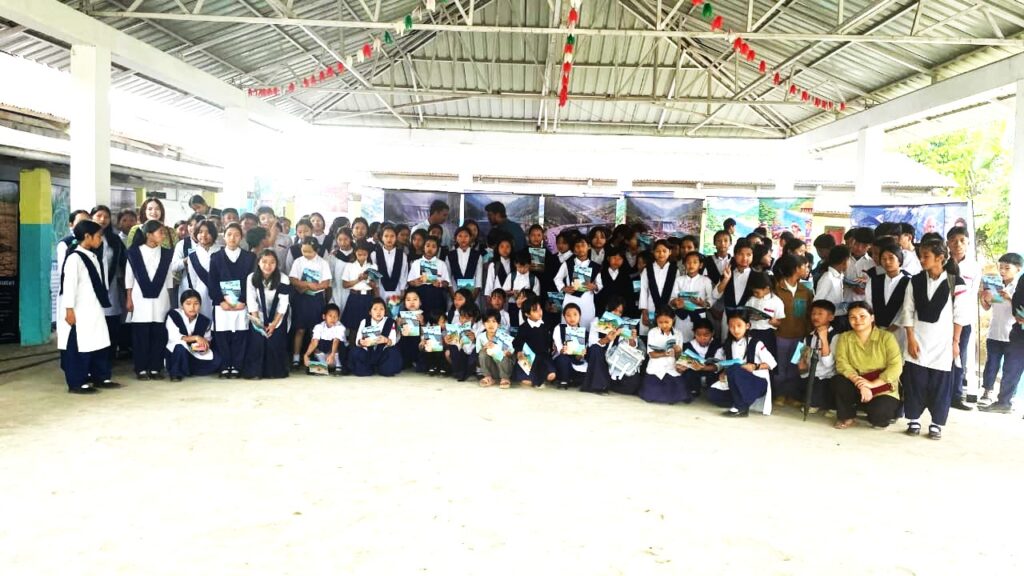
In an innovative step toward environmental awareness, an interactive school exhibition on the Siang Upper Multipurpose Project (SUMP) was successfully conducted at Government Upper Primary School, Rengo, engaging around 150 students through creative and accessible learning methods.
Titled “Siang Upper Multipurpose Project: Securing the Flow, Powering the Nation,” the initiative moved beyond traditional teaching formats to simplify complex ideas around river management, flood control, and sustainable energy.
At the heart of the programme was a 12-zone visual walkthrough, designed to narrate the journey and significance of the Siang River. Instead of passive instruction, students were actively guided through each zone, where concepts like clean electricity generation and balanced river management were explained in simple, relatable terms. This hands-on approach helped dispel misconceptions and encouraged fact-based understanding among young learners.
A standout feature of the event was the distribution of a specially designed anime-style FAQ comic inspired by Chhota Bheem, which translated technical information into an engaging narrative format. By blending storytelling with education, the comic captured students’ attention and made complex topics easier to grasp and remember.
“Effective education requires connecting with young minds in ways they understand,” a project spokesperson remarked. “By combining interactive exhibits with familiar storytelling formats, we are not just informing students about hydropower—we are encouraging them to take an interest in the sustainable future of their region.”
The initiative also received strong support from the school administration, whose active participation encouraged students to engage, ask questions, and explore the exhibits with curiosity. Their involvement played a key role in creating an open and interactive learning environment.
Overall, the exhibition successfully bridged knowledge gaps, replacing uncertainty with clarity, and fostering a deeper awareness of river systems and development among the youth of Boleng.