
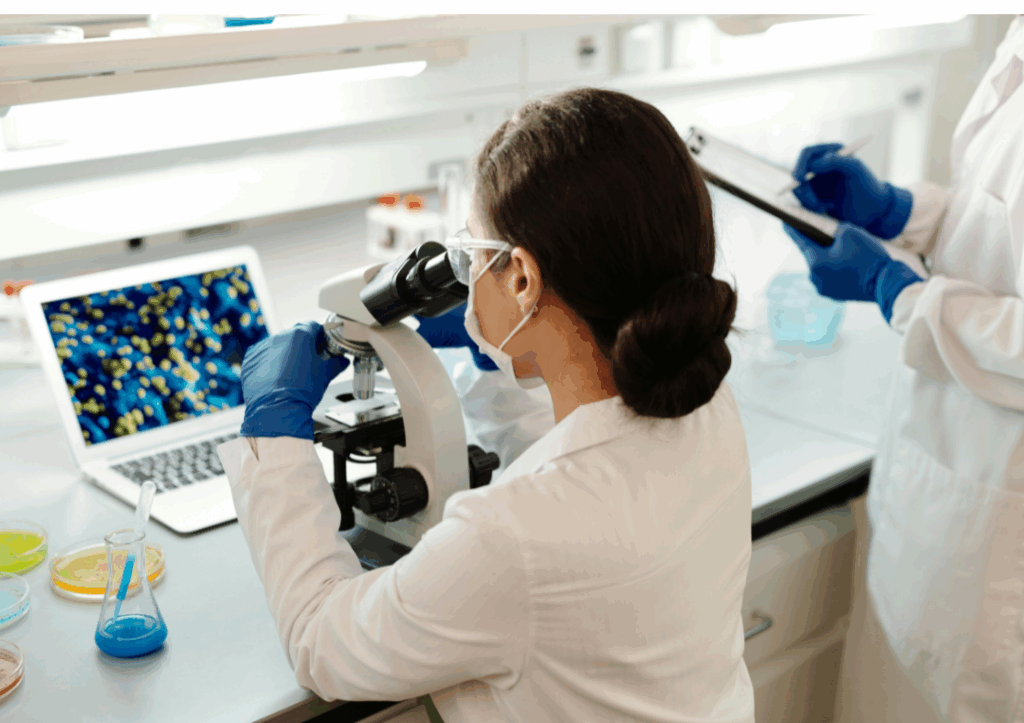
In 2025, the fusion of artificial intelligence (AI) and biotechnology is reshaping healthcare, agriculture, and sustainability. This powerful synergy leverages AI’s data-crunching ability with biotech’s biological precision to tackle humanity’s biggest challenges. From faster drug discovery to personalized treatments, this revolution is transforming lives. This article explores how AI and biotech converge, their real-world applications, challenges, and what lies ahead, offering insights for anyone curious about this game-changing trend.
What Drives the AI and Biotech Revolution?
The AI-biotech convergence thrives on three pillars:
- Massive Biological Data: Advanced sequencing and sensors produce vast datasets. AI decodes these, revealing insights humans couldn’t uncover alone.
- Computational Power: Cloud computing and AI algorithms process complex biological models, like protein structures, in record time.
- Collaboration: Global investments, exceeding $10 billion in 2023 for AI-biotech startups, fuel interdisciplinary breakthroughs.
This synergy accelerates innovation, making healthcare and other fields more efficient and impactful.
How AI and Biotech Transform Key Areas
1. Drug Discovery Gets Smarter
Developing drugs once took over a decade and billions, with a 90% failure rate. AI changes that by:
- Finding Targets: Tools like DeepMind’s AlphaFold predict protein structures, speeding up drug design.
- Screening Compounds: Machine learning scans millions of molecules, slashing lab testing time. Insilico Medicine, for example, found new drug candidates in months.
- Streamlining Trials: AI picks the right patients and predicts outcomes, cutting trial times by 30%, per a 2023 study.
Exscientia’s AI-driven cancer drug hit trials in just 12 months—a game-changer for patients with diseases like Alzheimer’s.
2. Personalized Medicine Becomes Reality
AI tailors treatments to your unique biology, moving beyond one-size-fits-all care.
- Cancer Care: Tempus uses AI to match cancer patients with therapies, boosting success rates by 20%.
- Drug Dosing: AI predicts how your body processes medications, improving safety for drugs like anticoagulants.
- Health Monitoring: Wearables like Fitbit use AI to spot issues like heart irregularities early.
This shift makes treatments more effective and affordable, putting patients first.
3. Synthetic Biology Innovates
AI supercharges synthetic biology, creating new solutions for health and industry.
- Gene Editing: AI refines CRISPR, cutting unintended edits by 50%, per a 2023 study.
- Bioengineering: Ginkgo Bioworks uses AI to engineer microbes for insulin or biofuels faster.
- New Proteins: AI designs enzymes for eco-friendly materials, like carbon-capturing proteins.
These advances power sustainable solutions, from lab-grown meat to biodegradable plastics.
4. Diagnostics Reach New Heights
AI enhances accuracy in diagnosing diseases, saving lives through early detection.
- Imaging: Google Health’s AI spots breast cancer in mammograms with 90% accuracy.
- Pathology: PathAI’s tools improve cancer diagnosis by 15%.
- Early Tests: Freenome’s AI blood test detects colorectal cancer with 85% accuracy.
These tools catch problems sooner, reducing healthcare costs and improving outcomes.
5. Agriculture and Food Systems Evolve
AI and biotech address food security and climate challenges.
- Resilient Crops: Bayer’s AI develops drought-resistant corn, boosting yields by 20%.
- Precision Farming: AI drones optimize water and pesticide use, cutting environmental impact.
- Alternative Proteins: Impossible Foods uses AI to create plant-based meat, meeting rising demand.
These innovations feed a growing world sustainably.
6. Environmental Solutions
AI-driven biotech fights pollution and climate change.
- Bioremediation: AI-engineered microbes degrade plastics 30% faster, per a 2022 study.
- Carbon Capture: LanzaTech’s AI turns emissions into biofuels.
- Biodiversity: AI tracks species via environmental DNA, guiding conservation.
These efforts align with global goals for a greener future.
Challenges to Overcome
The AI-biotech revolution isn’t without hurdles:
- Data Issues: Biased or incomplete data can skew AI results, as seen in early COVID-19 models.
- Regulation: Agencies like the FDA struggle to keep up with fast-paced innovation, delaying approvals.
- Ethics: Privacy risks from genomic data and unequal access to therapies raise concerns.
- Skills Gap: A shortage of 500,000 experts in computational biology slows progress.
Addressing these requires better data, clear regulations, ethical safeguards, and more training programs.
What’s Next for AI and Biotech?
By 2030, the AI-biotech market could hit $100 billion, per McKinsey. Expect:
- Automated Labs: AI-driven robots will speed up research.
- Holistic Health Models: AI will combine genomics and other data for precision medicine.
- Accessible Tools: Cloud platforms like Benchling will empower smaller labs.
- Human Enhancement: Neural interfaces and gene therapies may redefine human potential.
These trends promise a healthier, more sustainable world—if we navigate challenges wisely.
A Healthier Future Awaits
The AI and biotech revolution is transforming healthcare, agriculture, and the environment. By speeding up discoveries and personalizing solutions, it’s saving lives and tackling global issues. But success depends on ethical policies and equitable access. Explore this revolution—follow AI-biotech startups on X or dive into platforms like Benchling. The future is here, and it’s full of possibility.
Source: TMN